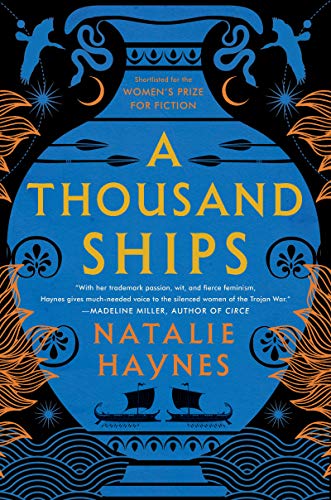
The classic myths we read in high school tell us of conquests of men and the glory they achieved from this events. A Thousand Ships focuses on the women in a unique perspective, told by Calliope, the goddess of epic poetry as she answers the pleas of a poet for inspiration. She compiles the stories of the many females—goddesses, demigods, Greeks, and Trojans—whose lives are affected by the Trojan war. Readers see that the drama of war is not only found on the battlefield, but in all the places women wait for their men to return, all the while enduring or succumbing to the horrors of politics, religion, and war. A Thousand Ships is not told in chronological order but is rather an assemblage of stories. The characterizations are so crisp and extraordinary that the reader is able to connect fully with each of these women.
The self-aggrandizing Greek gods wreak havoc on the lives of mortals and unabashedly use others—their peers, lower-level gods, demi-gods, and mortals as instruments to implement their dark impulses.
Men don’t come off any better than the ancient gods in A Thousand Ships. Achilles is not only a great warrior, but a killing machine; his indiscriminate body count includes not only soldiers, but innocent women, children, and the elderly. Agamemnon is pathetic, a coward hiding behind his men.
 A cast of mostly female characters, Hecabe (Priam’s widow), Cassandra (her daughter), and Andromache (Hector’s widow) are Trojan women captured by the Greeks. Other women featured include Penthesilea (an Amazon), Clytemnestra (Agamemnon’s wife), all facing moral choices equal to those of their men: when and how to resist their captors, to go along, to seek revenge and justice, to find their freedom. Penelope, having heard of Odysseus’s exploits from bards, tells their story via letters. The reader sees her patience growing thin as his cast of serial lovers expands and his trip home lengthens.
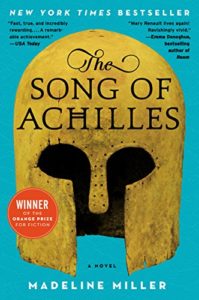
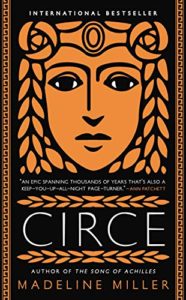
A Thousand Ships joins my other favorite retellings of Greek myths: Madeline Miller’s The Song of Achilles and Circe.
********************
A Thousand Ships is available through:
********************
This post contains Amazon Affiliate links. As an Amazon Associate, I earn a small amount from qualifying purchases.